










 Summary:
-
Regulators are accelerating discussions on spectrum bands for indoor Wi-Fi use
-
Additional unlicensed spectrum is critical to unlock Wi-Fi 6E and Wi-Fi 7 potential
-
Indoor broadband performance increasingly depends on Wi-Fi, not just access speed
-
Policy decisions will directly impact home, enterprise, and public connectivity
-
Spectrum reforms are becoming essential for digital infrastructure growth
Regulatory focus on spectrum bands for indoor Wi-Fi usage is intensifying, driven by a clear reality: broadband speeds delivered to buildings are only as good as the Wi-Fi performance inside them. While fiber and high-speed mobile networks continue to expand, the last few meters of connectivity inside homes, offices, and public spaces are increasingly the weakest link.
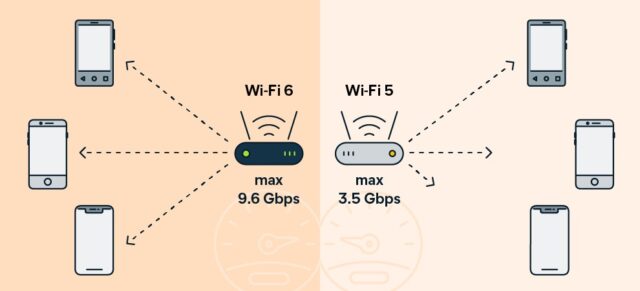
This has placed renewed attention on the availability of unlicensed and lightly licensed spectrum for Wi-Fi technologies. Modern Wi-Fi standards such as Wi-Fi 6, Wi-Fi 6E, and the emerging Wi-Fi 7 are designed to deliver multi-gigabit speeds, ultra-low latency, and support for dense device environments. However, these capabilities cannot be fully realized without sufficient spectrum, particularly for indoor use.
Why Spectrum Matters More Than Ever
Historically, Wi-Fi operated mainly in the 2.4 GHz and 5 GHz bands. While sufficient for earlier generations, these bands are now heavily congested. Smart TVs, laptops, smartphones, IoT devices, cameras, and gaming consoles all compete for limited spectrum, leading to interference and inconsistent performance.
Wi-Fi 6 introduced efficiency improvements such as OFDMA and better multi-user handling, but congestion remains a limiting factor. Wi-Fi 6E and Wi-Fi 7 were designed specifically to address this issue by leveraging additional spectrum, especially in higher frequency ranges suitable for indoor environments.
Without regulatory clearance and harmonized policies, these newer Wi-Fi standards cannot deliver their promised benefits at scale.
Indoor Connectivity Is Now a Policy Issue
Regulators increasingly recognize that indoor connectivity quality is no longer just a consumer electronics issue—it is a digital infrastructure issue. Remote work, online education, cloud applications, gaming, and smart home ecosystems all depend on reliable indoor Wi-Fi.
In urban environments, even users with high-speed fiber connections experience poor real-world performance due to congested Wi-Fi channels. This gap between access speed and indoor experience has triggered policy-level discussions on how spectrum can be better utilized to support indoor wireless networks.
Enabling Wi-Fi 6E and Wi-Fi 7
Wi-Fi 6E and Wi-Fi 7 rely heavily on access to clean, wide spectrum channels to support:
-
Higher throughput
-
Lower latency
-
Simultaneous device connectivity
-
Reduced interference
Indoor-only usage models are particularly attractive to regulators because higher frequency spectrum can be reused efficiently without causing wide-area interference. This allows policymakers to unlock capacity without impacting existing licensed services.
By enabling more spectrum for indoor Wi-Fi, regulators effectively future-proof broadband usage without the need for additional fiber deployment inside buildings.
Impact on Consumers and Enterprises
For consumers, expanded indoor Wi-Fi spectrum translates directly into:
-
Faster and more stable home internet
-
Better performance for video calls and streaming
-
Lower latency for online gaming
-
Improved smart home reliability
For enterprises, the impact is even more significant. Offices, campuses, hospitals, and industrial environments rely on dense Wi-Fi deployments. Without sufficient spectrum, these networks struggle under device load, leading to productivity losses and operational inefficiencies.
Wi-Fi 7, in particular, is positioned as a wireless alternative to short-range wired connections in some scenarios. This makes spectrum availability a strategic enabler for digital transformation.
Relationship with Mobile Networks
Another important aspect of this regulatory discussion is the complementary role of Wi-Fi and mobile networks. While mobile operators invest heavily in licensed spectrum for wide-area coverage, Wi-Fi handles the majority of indoor data traffic.
By strengthening indoor Wi-Fi through spectrum reforms, regulators indirectly reduce pressure on mobile networks, especially in dense residential and enterprise environments. This creates a more balanced and efficient overall connectivity ecosystem.
Challenges Regulators Must Address
Despite strong momentum, spectrum policy for indoor Wi-Fi must address several challenges:
-
Ensuring coexistence with existing services
-
Preventing harmful interference
-
Defining power limits and usage conditions
-
Harmonizing rules to encourage device ecosystem growth
Clear, predictable regulations are essential for manufacturers and service providers to invest confidently in next-generation Wi-Fi products.
Why 2026 Is a Turning Point
The urgency around indoor Wi-Fi spectrum in 2026 reflects broader digital trends. Data consumption patterns have shifted decisively indoors. Applications are becoming more latency-sensitive. User expectations are higher than ever.
Regulatory delays now have a direct impact on digital quality of life. Conversely, timely spectrum decisions can unlock significant economic and social benefits without massive infrastructure costs.
Final Insight:
Spectrum allocation for indoor Wi-Fi is no longer optional—it is foundational to modern connectivity. By enabling additional spectrum for Wi-Fi 6, Wi-Fi 6E, and Wi-Fi 7, regulators can dramatically improve real-world broadband performance. In 2026, the success of digital ecosystems will depend not just on how fast networks reach buildings, but on how well connectivity performs inside them.